(Image source from: Canva.com)
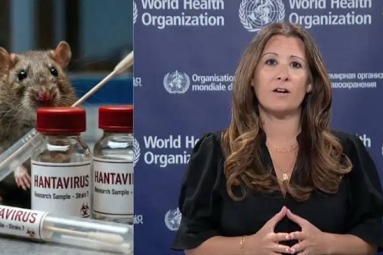
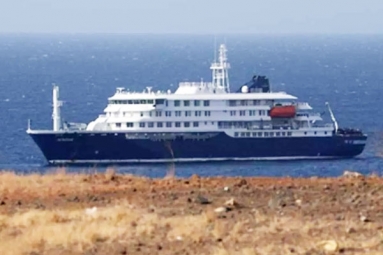
Former scientist Soumya Swaminathan from the World Health Organization mentioned that the current Hantavirus situation tied to a cruise ship seems manageable. This is because the virus spreads only through extended close contact, which is different from highly infectious diseases like COVID-19, measles, or flu. In a conversation with PTI Videos, Swaminathan explained that the virus has a long incubation period, ranging from six to eight weeks. This explains why the first case on the cruise ship appeared nearly a month after it departed in early April. She noted, "The virus has a pretty long incubation time, which is why it took about a month for the first person on the ship to contract it." She mentioned that the ship left around April 2-3, and the first case occurred at the end of April. Therefore, she suggested that to be cautious, "those individuals need to be isolated until that period has passed. "
The previous WHO chief scientist stated that the best approach would be to isolate everyone who was on the ship or closely interacted with those who were infected for the entire incubation duration. However, some nations might opt to isolate only those showing symptoms. "Some places might only isolate individuals if they show symptoms, but many are advising people to self-isolate until the incubation period concludes," she explained. Additionally, she emphasized that anyone showing symptoms during isolation should be tested for Hantavirus right away and added that strictly following isolation guidelines could effectively stop the virus from spreading further. "Basically, if you adhere to this until the incubation period concludes, the chance of the virus spreading is almost zero," she stated. Describing how the virus spreads, Swaminathan pointed out that the current strain is likely the only known type of Hantavirus that can spread from person to person, and the transmission so far is associated with long-term close physical interactions.
"Historically, including in this outbreak, transmission has only occurred through extensive close personal contact. On the cruise ship, this relates to individuals sharing a cabin or couples engaging in close and intimate contact," she clarified. Swaminathan also mentioned that the virus is not categorized as a sexually transmitted disease. "However, the virus has been detected in various bodily fluids. Therefore, it likely exists in saliva, blood, and possibly semen," she added. Furthermore, Swaminathan indicated that there is a "good chance" the virus might become aerosolized since Hantavirus causes respiratory infections and pneumonia. "Whenever dealing with a respiratory virus, it releases particles when we talk, cough, or even breathe. The smaller particles can turn into airborne particles," she explained.
She emphasized that this virus spreads much less easily than other viruses that are in the air and it doesn't pass on through normal social interactions. "It’s not normal interactions that spread it, so the efforts to track contacts and keep people apart should work well," she mentioned. Comparing it to the COVID-19 outbreak, Swaminathan indicated that the lack of quick spread by those not showing symptoms makes it easier to control. "Unlike SARS-CoV-2, which could spread quickly through people without symptoms, this virus allows us to identify contacts, separate individuals, and manage the outbreak effectively," she noted.